Stockbridge Land Just Sold For $28,000 An Acre. Listings Average $1.16 Million. Here's Why.
August 27, 2026
August 27, 2026
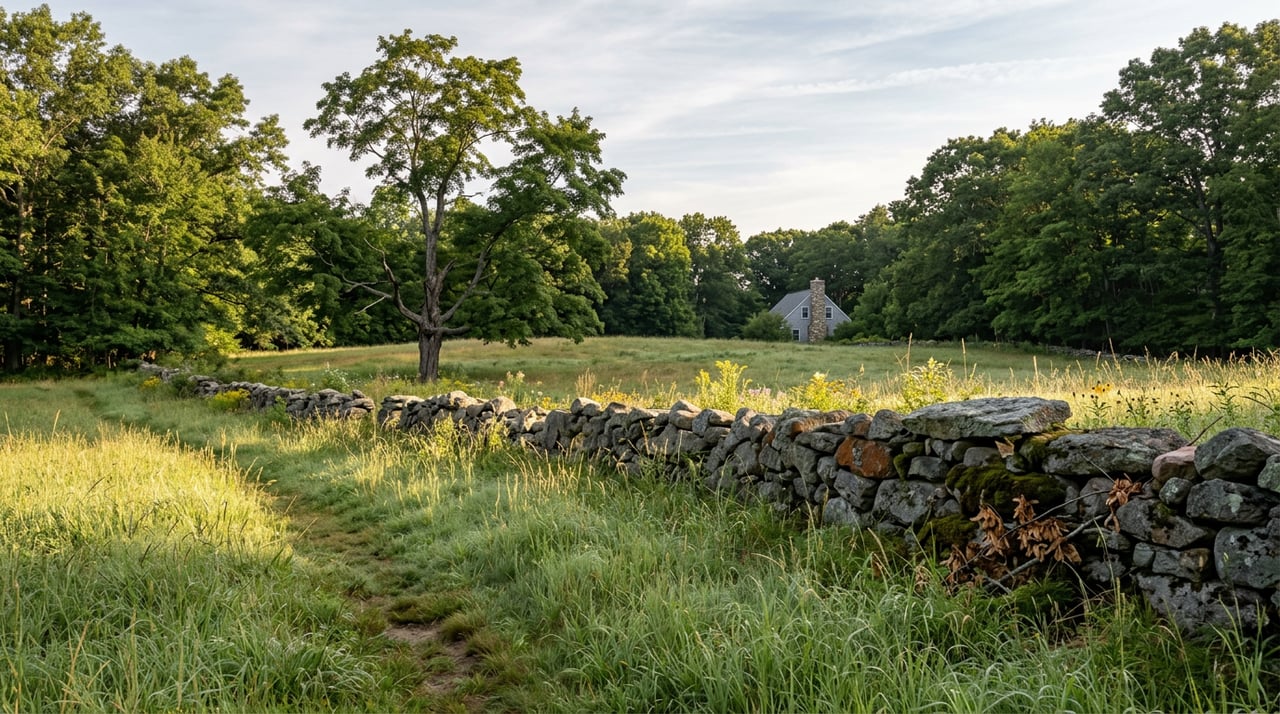
In December 2025, a 7.83 acre parcel on Rattlesnake Mountain Road in Stockbridge closed for $220,000 after 259 days on the market, about $28,000 an acre. Around the same time, aggregated listing data for the town put the average asking price of land in Stockbridge above $1.16 million an acre. Same town. Same zoning district in most cases. A 40x spread.
If you are shopping for acreage in Stockbridge, you have probably already noticed this. Two parcels a few miles apart, similar road frontage, wildly different price tags, and no obvious reason why. The reason is rarely the dirt. It is almost always a line item buried in the assessor's field card: whether the land is enrolled in Massachusetts Chapter 61, 61A, or 61B.
Chapter 61 and its two companion statutes, 61A and 61B, let landowners trade a long-term commitment to forestry, farming, or open recreational use for a much lower property tax bill. The land gets assessed on what it produces rather than what a developer would pay for it. That is the entire trick, and it is why raw acreage under one of these classifications can carry a fraction of the price tag of an identical unclassified parcel next door. The tax break is only valuable to a buyer who plans to keep using the land the same way. To a buyer who wants to subdivide, build, or sell house lots, that same classification is a liability wearing a discount as a disguise.
| Program | Minimum acreage per Stockbridge's program information | Use required |
|---|---|---|
| Chapter 61 | 10 contiguous acres | Forestry, under a 10-year state-approved management plan |
| Chapter 61A | 5 contiguous acres | Agricultural or horticultural, actively farmed for 2 prior years |
| Chapter 61B | 5 contiguous acres | Open space or recreational use |
None of the three prevent a sale. What they attach to a sale is the part that catches buyers off guard.
Pull land out of Chapter 61, 61A, or 61B, or convert it to residential, commercial, or industrial use, and two things happen at once.
The Town of Dighton's Chapter 61 information says the statute gives the town 90 days from an accepted purchase and sale agreement to actually close. That is not a timeline most buyers plan for when they assume a land deal moves like a house closing.
None of this is disclosed on a listing sheet the way square footage is. It shows up when a title search or a conversation with the assessor's office turns up the classification, sometimes well into a transaction that both sides assumed was straightforward.
A WAMC report described this Stockbridge example: at the town's Annual Town Meeting in May 2025, residents spent three hours debating whether to spend $600,000 acquiring a parcel at 0 Interlaken Cross Road, in part because the land was governed by Chapter 61 and carried the town's right of first refusal.
One resident argued the town should use that leverage to shape what got built next door.
Resident Amy Pollack made the same case from a different angle, telling the meeting there were over 50 similar blocks of land expected to reach the market in the coming years and arguing Stockbridge needed a blueprint before that happened rather than reacting parcel by parcel.
The meeting ultimately passed on the specific purchase, but the debate itself is the clearest local evidence that Chapter 61's right of first refusal is not academic in Stockbridge. It is actively shaping which parcels sell to private buyers, which get absorbed by conservation partners, and which end up back in front of a town meeting vote.
For a sense of what the other end of that spectrum looks like, in 2025 MassWildlife purchased 308 acres in Stockbridge for $1.8 million to create the Rockdale Highlands Wildlife Management Area, land that had belonged to the Stowe family, descendants of author Harriet Beecher Stowe, and to the Robinson Smith family associated with Tanglewood. The deal moved forward through a partnership with the Stockbridge Land Trust, whose president Rich Bradway said it had been a distinct pleasure for the Trust to help ensure the property stayed preserved and accessible for future generations. That acreage came out to roughly $5,800 an acre for a large, contiguous, permanently protected tract, a price that reflects its use as habitat and public recreation land rather than as future house lots.
Set that next to the $28,000 an acre paid for the Rattlesnake Mountain Road parcel and the seven-figure per-acre asks on some listing aggregators, and the pattern is clear. Price per acre in Stockbridge is not really a measure of the land. It is a measure of what the buyer and seller both understand about what can legally be done with it next.
If you are comparing per-acre figures across Stockbridge listings, treat that number as a starting question, not an answer. Before you anchor an offer to it, find out three things: whether the parcel carries a Chapter 61, 61A, or 61B classification, how long it has been enrolled, and whether the seller intends to notify the town of a change in use before or after your purchase and sale agreement is signed. That last point matters because you want that clock started early, not discovered during title work the week before closing.
If you plan to keep land in forestry or agricultural use, the classification is a genuine asset, not a hurdle, and it is worth confirming the existing forest management plan or farming activity is current so you inherit the tax benefit cleanly. If you plan to build, subdivide, or otherwise convert the land, budget for the rollback tax as a real transaction cost and build the town's 120-day window into your timeline the same way you would a mortgage contingency.
Does Chapter 61 classification mean the public can access the land? No. The classification is a private tax arrangement between the landowner and the town. Public access only follows if the land is separately acquired for conservation, as with Rockdale Highlands, or if a conservation restriction is recorded against the deed.
Can I still build one house on land enrolled in Chapter 61? Generally yes. The classification applies to the qualifying acreage itself. Structures and their immediate curtilage are excluded from the classified area and taxed at full value already, which is why many working farms and forested estates in Stockbridge carry a home on unclassified land alongside acreage that is classified.
What if I buy the land and simply don't renew the classification? Letting a Chapter 61 enrollment lapse without converting the use does not by itself trigger the rollback tax in every case, but converting to a residential, commercial, or industrial use, or selling with that intent, does. Confirm the specific circumstances with the town assessor and your attorney before you assume either path is penalty-free.
Stockbridge's acreage market rewards buyers who ask about the classification before they fall in love with the price per acre. If you are weighing a parcel here, or trying to figure out what a listed price actually reflects once you account for it, Paula McLean Realtors has spent decades reading exactly this kind of fine print for Berkshire County land. Make one call, speak with Paula today, and find out what a number like that is really telling you.
This article is general information, not legal, tax or financial advice. Consult a qualified professional about your situation.
October 15, 2026
October 8, 2026
October 1, 2026
September 24, 2026
September 17, 2026

September 10, 2026
September 3, 2026
August 27, 2026
August 27, 2026
We hold our client's interest first and foremost, whether you are shopping for your first home, looking to downsize, seeking a larger home, or relocating. We are diligent, knowledgeable, proficient, and ready to help you with your next move!